AOM3 Builders

General Contractor

  • Home
  • About Us
  • Projects
    • Religious Facility Projects
    • Residential Projects
    • School Projects
    • Hospital Projects
    • Non-residential Projects
    • Commercial Projects
    • Government Projects
    • Industrial Projects
  • Services
    • Scaffolding Rentals
    • Plumbing Services
  • Blog
  • Contact Us
You are here: Home / Archives for Blog

How to Turn Your Plumbing Business into a High-Growth Venture

May 11, 2023 By Joshua Leave a Comment

The plumbing industry is a vital component of modern society. It provides essential services that keep our homes and businesses functioning correctly. With the growing demand for plumbing services, there is a vast opportunity for plumbing businesses to grow and thrive in today’s market. However, it’s not enough to offer quality plumbing services to customers; plumbing businesses must take steps to turn themselves into high-growth ventures to stand out.

By achieving high-growth status, plumbing businesses can expand their customer base, increase their profits, and become leaders in their industry. However, achieving high growth requires careful planning, strategic thinking, and a willingness to embrace change. In this article, we’ll provide a comprehensive guide on how to grow a plumbing business into a high-growth venture, including key strategies and best practices to follow.

Table of Contents
  • Analyze your current business
  • Develop a growth strategy
  • Build your brand
  • Invest in your team
  • Monitor and measure your progress
  • Conclusion

Analyze your current business

Analyzing your current business is one of the first steps to turning your plumbing business into a high-growth venture. This involves closely examining your strengths, weaknesses, opportunities, and threats (SWOT analysis). A SWOT analysis can help you identify areas where your business is excelling and where it may be falling short.

In addition to conducting a SWOT analysis, it’s essential to identify your unique selling proposition (USP). Your USP sets your plumbing business apart from your competitors and gives customers a reason to choose your services over others. This could be anything from your high-quality craft to your exceptional customer service or your use of eco-friendly materials.

Furthermore, determining your target market and ideal customer is crucial to creating an effective growth strategy. Who are the customers that are most likely to need your plumbing services? What are their needs, pain points, and preferences? By answering these questions, you can create a targeted marketing strategy and tailor your services to meet the needs of your ideal customers better.

Analyzing your business and identifying your unique strengths and target market can provide a solid foundation for future growth.

plumbing
Photo by Heiko Ruth

Develop a growth strategy

You must develop a comprehensive growth strategy to turn your plumbing business into a high-growth venture. This involves identifying areas of your business that need improvement, setting goals and objectives, and developing a plan to achieve them.

Once you have analyzed your current plumbing business, it’s time to develop a growth strategy. This strategy will outline the steps you need to take to achieve your business goals and become a high-growth venture. Here are some steps to follow when developing your growth strategy:

  1. Set Clear Goals: Define what success means to you and your business. Be specific about the metrics you want to track, such as revenue, profit margins, or customer acquisition rates. Use these goals as a roadmap for your growth strategy.
  2. Identify Growth Opportunities: Look for opportunities to grow your business. This might include expanding your service offerings, targeting a new market segment, or developing strategic partnerships with other companies. Identify the opportunities that align with your goals and make the most sense for your business.
  3. Create a Marketing Plan: A well-executed marketing plan can help you attract new customers, build your brand, and generate revenue. Consider using traditional and digital marketing tactics like direct mail, social media advertising, and search engine optimization.
  4. Develop Your Team: Your team is crucial to the success of your plumbing business. Ensure you have the right people in the right roles and provide them with the training and resources they need to excel. Also, consider outsourcing certain functions to third-party providers to free up your time and resources.
  5. Invest in Technology: Technology can help you streamline operations, improve customer service, and make data-driven decisions. Look for tools and software to help you manage your workflow, track your finances, and analyze your marketing performance.

Build your brand

Building a strong brand is crucial for the growth and success of any business, and the plumbing industry is no exception. A strong brand can differentiate your business from competitors and attract new customers. Here are some steps to build a strong brand for your plumbing business:

  1. Define your brand identity: This involves determining your brand’s mission, values, personality, and tone of voice. Creating a brand identity that aligns with your target audience and differentiates your business from competitors is essential.
  2. Create a memorable logo and visual identity: A solid visual identity can help your brand stand out and be easily recognized. Invest in creating a unique logo, color scheme, and other visual elements that reflect your brand’s identity.
  3. Develop a consistent brand message: Your message should be consistent across all channels and touchpoints. This includes your website, social media, advertising, and customer interactions. A consistent message helps build trust and credibility with your audience.
  4. Leverage customer reviews and testimonials: Positive reviews and testimonials can be powerful tools for building your brand. Encourage satisfied customers to leave reviews on your website and social media platforms. Share these reviews and testimonials on your website and social media channels to build trust with potential customers.

Investing in your brand can differentiate your plumbing business from competitors and create a strong foundation for growth.

Invest in your team

Your team is the backbone of your plumbing business. With a skilled and dedicated team, achieving growth and success can be easy. Therefore, investing in your team is crucial to developing your business.

One way to invest in your team is to provide regular training and development opportunities. This can include training on the latest plumbing techniques, safety procedures, and customer service skills. By keeping your team up-to-date with industry trends and best practices, they will be better equipped to provide exceptional customer service.

Another way to invest in your team is to create a positive and supportive work environment. This can be achieved by recognizing and rewarding good performance, fostering open communication and collaboration, and providing career growth and advancement opportunities.

Remember, your team is not only a group of employees but also a reflection of your brand and values. Investing in them will help them grow, succeed, and benefit your business in the long run.

pexels jan zakelj 9389356
Photo by Jan Zakelj

Monitor and measure your progress

As you implement your growth strategy, monitoring and measuring your progress is vital to ensure you’re on track to achieving your goals. This involves regularly tracking and analyzing key performance indicators (KPIs) related to your business growth.

Some KPIs you may want to track include:

  • Revenue growth
  • Customer acquisition and retention rates
  • Conversion rates on your website and other digital platforms
  • Return on investment (ROI) for your marketing campaigns
  • Online reviews and customer satisfaction scores

By regularly reviewing your KPIs, you can identify areas where you excel and may need to adjust your strategy.

It’s also essential to adjust your strategy based on data and results. For example, if you notice that your social media advertising campaigns are generating a low ROI, you may want to shift your focus to other channels that are performing better.

Finally, continuously seeking new growth opportunities is essential as you continue to grow your plumbing business. This may involve expanding your service offerings, targeting new customer segments, or investing in new marketing channels. By staying agile and open to new opportunities, you can continue to drive growth and stay ahead of the competition.

Conclusion

Growing a plumbing business takes time, effort, and a commitment to excellence. You can turn your plumbing business into a high-growth venture by analyzing your current business, developing a growth strategy, building your brand, investing in your team, and monitoring your progress.

Remember that growth is a continuous process, and you may need to adjust your strategies as you go along. Keep monitoring your progress and seeking out new growth opportunities.

Don’t be afraid to take calculated risks and think outside the box. With the right mindset and a willingness to learn and adapt, you can achieve significant growth and success in the plumbing industry.

So take action today and implement these strategies to turn your plumbing business into a high-growth venture!

Filed Under: Blog

Master The Art Of Woodworking – Starting Here!

January 19, 2023 By Joshua Leave a Comment

Woodworking is an art form that has been celebrated for centuries. From ancient furniture making to modern-day cabinetry and sculpting, woodworking involves the skillful crafting of wood into a beautiful product. Whether you are a novice or experienced in the craft of woodworking, it’s important to understand some fundamentals of this art form before getting started.

Table of Contents
  • Woodworking basics
    • Start small
    • Get inspiration
    • Set up a workplace
    • Plan & practice
  • Choosing the right tools
  • Basic woodworking skills for beginners
    • Drilling
    • Cutting
      • Jig saw
      • Hand saws
    • Understanding wood
    • Sharpening your tools
    • Cut a mortise and tenon joint
    • Cut dovetail joints
    • Painting & finishing
  • Safety considerations
  • Woodworking ideas & projects to try
    • Cutting board
    • Simple storage box
    • Address number with wall planter
  • Conclusion

Woodworking basics

Building useful, usable wood objects requires the talent of woodworking. Additionally, you must use some tools. You can create anything, from a dog house to extraordinary furniture for your home; there are no restrictions.

While some people might consider having a woodworking business or job, that’s not the usual case anymore! Woodworking is now a creative and emotional outlet. Making the world a better place is a passion shared by millions of people who create a ton of beautiful and original DIY projects.

Before getting into any technicalities, here are some essential advice for beginners. These will help you navigate this vast ocean of woodworking with ease.

Start small

The biggest error beginners make is taking inspiration from the large projects they see on Pinterest completed by seasoned woodworkers and deciding to start on something comparable.

Exercise caution and start with simple woodworking projects, preferably close to home. By doing so, you can accomplish two goals at once and construct them as you study. 

It would be best if you started with outdoor goods to hone your carpentry skills because they don’t require as much precision as a new sofa table might. Outdoor objects are perfect for this.

Get inspiration

The greatest time to begin studying woodworking is right now. The DIY generation has produced thousands of exquisite and artistic projects, all available online. Viewing the finished products and images can motivate and unleash your creativity.

The plans are presented in a very organized fashion with detailed directions so you can easily follow them. You only need to invest time; they contain the necessary dimensions, cut lists, tools, and materials. Maintaining motivation is crucial, so try to construct things that appeal to you and look good.

Set up a workplace

For woodworking, you must have a woodworking space that is both secure and sizable. Finding a location in your house where you can use your tools and produce noise can be difficult.

A risky work environment has too many extension cords, unstable surfaces, and inadequate ventilation. If you cannot find a suitable area in your home, consider working outside on a beautiful day. Using a pair of sawhorses and a half sheet of 34″ plywood, a great workspace may be created for the lowest possible cost.

Plan & practice

Although woodworking is rewarding, you will need to work hard to achieve perfection in the quality of your finished creations.

Making a project plan in advance helps you have a smoother project completion and prevents you from making any mistakes. You will be prepared with a list of all the equipment, the number of materials, the budget, and the time you will need to devote to the project. This enables you to finish the project on schedule while also saving time.

Your skills will improve one project at a time as you learn from your mistakes. The most important thing is to like what you are doing; if you are passionate enough, you will succeed.

Back to Table of Contents

Choosing the right tools

Woodworking is like returning to school. It’s similar to taking craft lessons and learning to cut, glue, and mark materials to create a lovely work of art.

Woodworking tools come in two varieties: hand tools and power tools. Most of the labor can be completed using hand tools. On the other hand, power tools are far more sophisticated but need greater skill and safety precautions.

Getting some fundamental hand tools and a few power tools is the best way to start. Doing so may expand your investment while maintaining the flexibility to upgrade your tools as your business develops.

woodworking
Photo by Tima Miroshnichenko

Basic woodworking skills for beginners

You are now mentally prepared to board the ship, so let’s acquire some fundamental skills that will give you self-assurance.

While there are several woodworking tricks out there, these skills will make it clear that you can also execute many woodworking tasks using affordable or exceptional tools.

Drilling

Working on practically any DIY project involves drilling holes. The most effective tool for this is a cordless drill because they are highly effective, reliable, and affordable. They assist you in various tasks, including tightening screws and drilling holes of any size into multiple materials.

A drill is straightforward to use, but there are a few tactics and tips you can pick up to improve your usage of it and get the most out of it.

Cutting

You can cut the materials in various ways, including jigsaws, table saws, circular saws, and other tools. However, a jig saw and a hand saw are the most cost effective and suitable for 85–90% of your jobs.

Jig saw

Jig saw is an excellent tool for practically any job. It is a fantastic all-purpose saw with a reciprocating blade. They perform well for cutting curves and unusual cuts but could be better when you want to make precisely straight cuts. These blades are reasonably priced, compact, and simple to switch out for cutting various materials.

Hand saws

These work well for rapid, straight cuts that don’t require much accuracy. Although it’s the best option for beginners who want to get started quickly and with a small investment, it has the drawback that you need different saws for different materials. You will incur an additional expense, but not a significant one.

Suppose you want to produce more precise cuts. In that case, you can use a circular saw, which is very powerful and calls for a competent carpenter. They are ideal for cutting various materials with lengthy, straight, and accurate cuts.

Understanding wood

Knowing the direction to place the wood board in is crucial and how to position it correctly is vital. The same is true while picking out the timber.

It’s important to plane the board in the direction that best suits the wood’s grain. Like caressing a cat, the hairs will lie down smoothly if you proceed from head to tail. The wood is also impacted by the humidity (contraction & expansion).

Similar to how different wood varieties respond differently to meteorological conditions. Their other moisture contents will impact the glue, paint, and stain you use.

Sharpening your tools

A common concept among woodworkers holds that to make things run smoothly; one must “let the tool do the work.” If your hand plane or saw requires a lot of push to shave or cut, you must understand that you are doing it wrong.

It would be best if you made it a practice to sharpen your tools. It is among the most crucial foundational abilities because dull tools can be risky and ineffective.

Cut a mortise and tenon joint

The most basic type of joint used in woodworking is the mortise joint. By interlocking them at a 90-degree angle, two parts that are horizontal and vertical can be linked (like a chair rail and a leg). A tenon can be inserted into the mortise to accomplish this.

A decent practice of employing the technique can assist you in getting a great and tight fit. There are various techniques for creating a mortise and calculating the tenon’s width. The tenon is cut with a few straight saw strokes.

Once you master the art of laying this joint precisely, the doors to the world of woodworking will open and welcome you.

Cut dovetail joints

A dovetail joint is the most popular and reliable method of joining the board corners if you’re making a box. The wedge-shaped “tails” with a one-sided cut that fits into the “pins” are involved. The unsightly joinery was covered up with paint or molding.

Creating dovetail joints has become a litmus test for serious woodworkers, but feel free to give it a try.

Painting & finishing

The crucial concern is how you will finish and give it a professional look after spending hours creating your perfect woodworking project.

Finishing enhances aesthetics and safeguards the integrity of the construction. So take your time with this.

People use different types of finishes for their projects. Shellac and paint are both used by some. A nice paint is usually used for the basic finish. The sort of material you will put it on will determine which of the two regularly used paint types you should use.

  • Latex paint – a water-based paint used in the majority of everyday applications. By using soap and water, it is simple to clean. Additionally, applying it to materials is simple and lasting.
  • Oil-based paint – Although this paint sticks to the surfaces better, cleanup is more complicated. Oil-based paint should be used when painting over an oil-based paint covering.

The next step is to select the sheen after selecting the paint (flat to gloss). A glossy finish will be more durable, while flat paint will conceal flaws better.

Back to Table of Contents

Safety considerations

Woodworking might become a nightmare if you don’t adhere to the fundamental safety guidelines.

Most of them were brought on by failure to take measures, so carefully read the most crucial section of this beginner’s guide to woodworking.

  • Use protective eyewear at all times.
  • Put on appropriate attire.
  • Put on safety footwear.
  • Keep in mind to unplug the power cord when necessary.
  • Refrain from being distracted while working.
  • Keep a fire extinguisher nearby your place of employment.
  • There should be sufficient lighting and ventilation.
  • Using a table saw, be sure there is a splitter.
  • When a machine is running, avoid manually cleaning the cutting head of sawdust or debris; instead, use a stick or a brush once the machine has stopped.
  • Always do proper grounding of electrical equipment.
  • Never use compressed air to clean sawdust, turnings, or other debris off equipment or clothing.
  • Sharpen your cutting edges and implements.
  • Placing masking tape along the area that will be cut will help to prevent the wood fibers from splintering and is a simple approach to avoid splintering of wood.

Woodworking ideas & projects to try

Ready to start your first project? Avoid making an enormous output like a shed for your first project; you can always start small. This way, you can begin without big capital and enhance your woodworking skills. 

These fantastic projects allow you to practice some fundamental woodworking techniques like table sawing, sanding, joining pieces of wood with glue, planning, and more. You can also make a profit from woodworking!

Here are some beginner-friendly woodworking projects you can complete without buying costly woodworking tools.

Cutting board

Making a cutting board for one of your initial basic woodworking jobs needs to come naturally to you. How difficult can it be, after all? Take a piece of wood, cut it to the desired dimensions, plane it, router the edges smooth, carve some decorative grooves, thoroughly sand it, and add your preferred finish, and you’re done.

It should be noted that while a thickness planer is recommended, you can use a good old hand plane instead. The same is true for the table saw, which you can replace with less expensive options like a competent circular saw or a handsaw that can cut rip lumber.

Simple storage box

Construct a simple storage box that you may utilize for various purposes. This box can be handy for organizing your children’s toys or storing woodworking supplies in your workshop.

The best feature is how simple it is to assemble this box. Furthermore, you won’t need any expensive tools to create this, and only a little can go wrong when you’re making it.

Address number with wall planter

Welcome guests with a wooden address number wall planter to let them know this home is home to a self-taught woodworker. This novice woodworking project is a perfect example of how things can have charm simply by being straightforward.

Back to Table of Contents

Conclusion

Woodworking is an exciting and rewarding hobby that can bring immense joy and satisfaction to those who take part. The tools and materials needed are relatively inexpensive compared to other hobbies. With a bit of practice, anyone can become a master woodworker in no time. It’s also a great way to learn new skills, express your creativity, and explore the world of woodworking.

Filed Under: Blog

Scaffolding Parts and Scaffolding Types

October 18, 2022 By Jabez Anthony III 3 Comments

Table of Contents
  • Parts of Scaffolding
  • Types of scaffolding
    • Tubular and Walkthrough Frame Scaffolds
    • Rolling Scaffolds
    • Tube and Clamp Scaffolds
    • Systems Scaffolds
    • Suspended or Swing Set Scaffolding
    • Mast Climbing Scaffolding
  • H Frame Scaffolding
    • What is H Frame Scaffolding? Where To Used It?
    • Properties of H Frame Scaffolding
      • Usage Areas of H Frame Scaffolding
  • Is scaffolding dangerous
    • reasons for scaffolding accidents

Around the world, construction is generally impossible without suitable types of scaffolding. Built around buildings and in civil engineering projects, these temporary work platforms enable people, along with their tools and goods, to be transported safely along their multistory heights. This, in turn, will allow them to safely and efficiently complete tasks such as painting, plastering, and brickwork outside buildings. Scaffolds are also frequently utilized within buildings, enabling employees to access difficult-to-reach areas like ceilings or electrical installations.

Depending on the requirements of the construction workers’ tasks and the building standards they are working on, scaffolding is constructed in various ways. While bamboo or wooden scaffolding is a less expensive option in some nations, large-scale construction projects typically use other materials like steel or aluminum varieties. These metals offer superior strength and sturdiness and the ability to be developed to great heights. Although more expensive than steel, aluminum is frequently chosen as the material of choice for many different kinds of scaffolding. Because workers can more easily move aluminum because it is light. Therefore, aluminum scaffolds take less time to assemble and disassemble. 

To rent a scaffolding, see Scaffolding Rentals.

Parts of Scaffolding

There are numerous distinct types of scaffolding. Depending on the specific layout of the scaffold, it is typically made up of one or more planks joined by various supports.

The critical components of scaffolding are listed below, along with descriptions of what each one does:

  • Base jack: The base jack, often referred to as the soleplate, serves as the load-bearing base for the scaffold, which is made up of plates on the ground. It helps to support the vertical standards that are formed by the platform.
  • Standard: which is also known as uprights are the vertical poles that make up the scaffold. They often comprise common types connected to the horizontal braces, called ledgers, forming scaffolding.
  • Ledgers: are horizontal bracing that supports the scaffold’s standing platform and runs parallel to the wall.
  • Putlogs: are horizontal braces that support the standing platform of the scaffold by running perpendicular to the wall.
  • Transoms: Putlogs that cross over ledgers at their ends are called transoms. They carry loads by frequently supporting the boarding planks, also known as battens or decking boards, on which workers stand.
  • Batten: Batten, also known as board or decking, refers to the planks that make up the standing area for scaffold workers.
  • Brace: The scaffold’s overall structure is made firm by the diagonal tubes that make up the braces.
  • Bridle: Bridles are horizontal supports that bridge openings.
  • Couplers: Fittings that connect the various parts of a scaffold are also known as couplers.
  • Scaffold tie: The scaffold is fastened to other structures using scaffold ties.
  • Guard rail: On scaffolds, guard rails are one safety barrier. They prevent workers from unintentionally falling from the platform and are generally about one meter in height.
  • Toeboard: Toeboards are another form of protective measure on scaffolds. They are exceptionally short vertical barriers that give workers a sense of their position on the platform concerning its edge. They also help to prevent implements like screwdrivers from slipping off the edge of the boards.

Some scaffolds have different ladders or stairways to make it simpler for workers to board and depart and occasionally overcome physical limitations while on the scaffold. Other people might also have trash chutes for securely removing waste from the scaffold.

Using these essential parts, contractors and workers build specific scaffolding types to suit their needs. We take a look at the usually used scaffolding types below:

Types of scaffolding

scaffolding types
image source: cuttingtechnologies.com

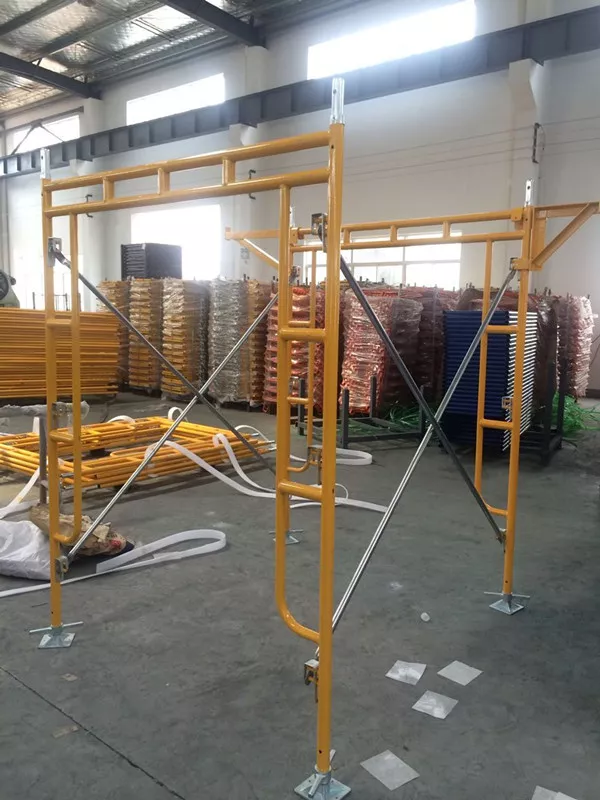
Tubular and Walkthrough Frame Scaffolds

Walkthrough Frame Scaffolds
image source: scaffold.com

One of the most fundamental types of scaffolding is the tubular frame scaffold, which may be shaped to the lengths and configurations required for a specific building project.

While steel frames are standard, Also quickly gaining popularity is aluminum tubing. Because the metal is lightweight, workers can assemble and disassemble it quickly. Ladders are frequently attached to or integrated into tubular constructions. However, staircases or ladders with additional safety features are advised for high-rise scaffolds higher than 30 feet.

The walkthrough frame is a variant of the tubular frame scaffold with high platforms that provide the uninterrupted movement of personnel, bystanders, and/or materials below.

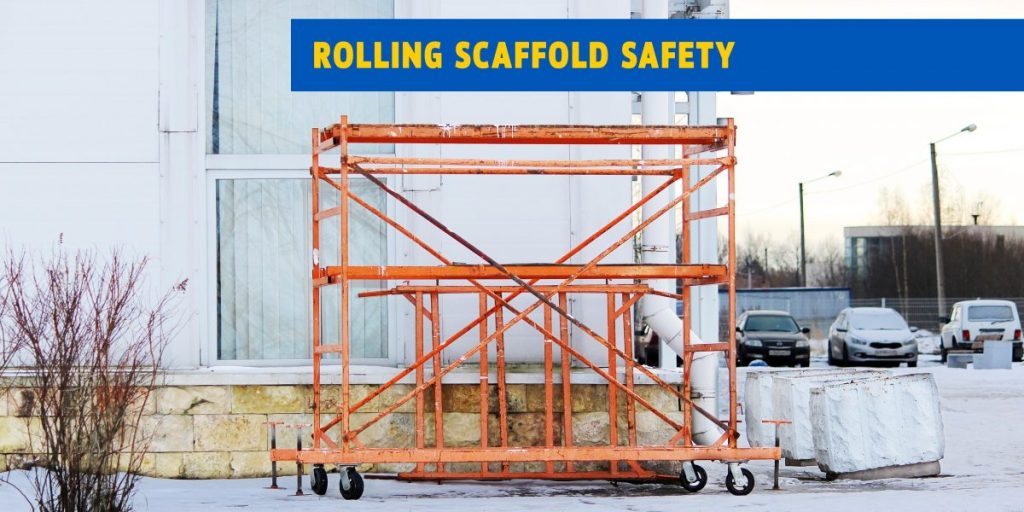
Rolling Scaffolds

rolling scaffold safety 1200x600 1
image source: onsitesafety.com

Rolling scaffolds are, quite simply, scaffolds on wheels, frequently used for interior building work like electrical installations or wall painting. These projects call for the same-sized platforms for short durations at multiple locations; wheels enable one scaffold to be conveniently transported wherever needed. Of course, these scaffolds are equipped with brakes to firmly park them where required.

The farm wagon scaffold is a variant of the rolling scaffold hoisted over a machine with tires. This is typically used for external or industrial buildings, often sheet metal siding and similar materials.

Tube and Clamp Scaffolds

tube and clamp scaffolding
image source: en.wikipedia.org

Due to its flexible structure, tube and clamp scaffolding is one of the oldest types of steel scaffolding. Consists of two parts: clamps and tubes, also referred to as couples. This structured style is simple to assemble and may be shaped as you choose.

Construction workers must use the couplings to join the vertical and horizontal tubes and build any type of scaffolding structure, regardless of height, width, or shape.

This makes tube and clamp scaffolds particularly advantageous for buildings where impediments prevent using more linear scaffolding types.

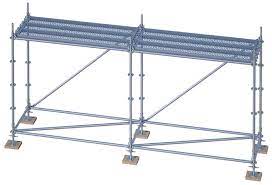
Systems Scaffolds

download
image source: scafom-rux.com

Systems scaffolds are different kinds of flexible scaffolds that use prefabricated horizontal and vertical sections to provide the structure needed for a construction job. They can be utilized for non-linear, round, or dome-shaped constructions even though they are less pliable than tube and clamp scaffolds.

Systems scaffolds are manufactured in wide varieties, such as steel versions for heavy loads and lighter aluminum ones for smaller repeated scaffold structures.

Galvanized steel is used in Cuplock systems scaffolding, with connection points (referred to as clocks) spaced consistently every half-meter to a meter. This makes it perfect for developing repeatable, standardized systems.

Staircase towers are another common design of scaffolding system that enables workers to travel quickly between levels. These come in handy when employees require short-term, secure access to a particular building area.

Suspended or Swing Set Scaffolding

Suspended Scaffold
image source: scaffoldpole.com

For exceptionally high-rise buildings or for construction work involving the upper stories of a building, contractors prefer to use swing set scaffolding suspended from a building’s roof. Compared to other scaffolding kinds constructed from the ground up, this is considered a more practical and affordable option.

A swing set scaffold consists of a scaffold that may be raised or lowered by an external crane, an electric motor, or a cable pulley system, depending on the height of the building. However, the platform height of some swing sets is fixed and cannot be changed for positioning purposes.

Scaffolds for swing sets are best suited for small-scale tasks like rapid maintenance like painting. Still, longer-term jobs can use heavy-duty kinds.

Mast Climbing Scaffolding

Mast climbing platforms for enhanced efficiency and
image source: alimak.com

Moving along a fixed tower constructed from the ground up, a mast climber can change its position along a building’s height, similarly to swing set scaffolding. An electric motor or a gas engine power the platform. Depending on the project, the tower’s height can range from a few floors to several stories.

An obvious advantage over swing sets is that they can bear a large load. And their position can be minutely adjusted, which comes in handy for brick or block-work. Another benefit of mast climbers is that they can be accommodated in construction sites with limited area as they do not take up a lot of space on the ground. However, depending on the work’s scale, they may contain more than one tower.

They work best for projects with a medium to high height. They are used by workers while plastering walls, adding siding, or windows. The mast climber frequently features distinct platforms for employees and supplies at various heights, which makes it easier for the workers to operate ergonomically.

H Frame Scaffolding

h frame scaffolding
image source: supertekscafform.com

What is H Frame Scaffolding? In its most basic form, this scaffolding system is used for interior plastering projects like walls and facades. The other uses are painting, insulation, facade cladding, and building and repairing ships.

Another detail about H Frame Scaffolding is that it is divided into three parts: vertical, horizontal, and diagonal. Comfortable and dependable is the H Frame Scaffolding system. By establishing rigidity with the connections, it is additionally resistant to buckling. Further, it includes secure spaces where you can transport loads.

What is H Frame Scaffolding? Where To Used It?

H frame scaffolding guarantees that you save time and effort because of its characteristics. Essentially, the system is made up of linked frames. The height of an H frame is 2 meters, and the distance between them is 2.5 meters. In this system, auxiliary components are also employed.

  • Metal plank
  • Stairs with or without landing
  • Adjustable base jack
  • Adjustable support

The scaffold is more robust and safer thanks to steel working platforms. Passageways between feet are safe inside scaffolding with some applications such as a staircase or access ladder. The use of scaffolding clamps in jacketing ensures scaffold safety and makes its application easier.

Properties of H Frame Scaffolding

The system is made of TS EN 10219-1 approved tubes, frames measuring 48.3 mm by 3.0 mm, diagonal elements measuring 42 mm by 2.5 mm, and horizontal components measuring 34 mm by 2.0 mm. Working platforms are created using a roll-forming machine with a carrying capacity of 300 kg per square meter. The system has galvanized hot-dip according to TS EN 12811-2 specifications.

Usage Areas of H Frame Scaffolding

H frame scaffolding is a simple tool that can be used to build a variety of constructions, including:

  • Within homes and tall buildings
  • In commercial and retail establishments
  • at underground and subway stations
  • In commercial structures
  • Energy-related facilities
  • In healthcare facilities like hospitals
  • In slabs for bridges and viaducts
  • projects for hydroelectric plants

In general, the system is preferred for tall and thick slabs. It is made up of two components: ledgers and an H frame. All aspects of the system can be installed with human power. Gaps of the tower are adjusted by calculating slab loads compatible with the project.

Is scaffolding dangerous

crazy scaffolding art project
image source: weburbanist.com

reasons for scaffolding accidents

Scaffolding is a temporary structure that lets workers move more freely and reach heights than they could if they were merely utilizing a ladder. Construction workers in almost every construction industry employ scaffolding to build new buildings and repair existing structures.

While using these structures, workers face many dangers and are at an increased risk of injury. Workers performing construction, maintenance, or repair at any height are already at risk for injuries. The following are some of the most frequent causes of scaffolding accidents:

Improper scaffold construction:  when scaffolding is not built or maintained correctly, it can lead to accidents and injuries.

Scaffolding not properly inspected: Concerning building scaffolding correctly, A construction sector employee who has received specialized training must do these inspections. They will need to understand the specifics of scaffolding, including how it is built and maintained.

Falling objects: Things like tools or bits of construction material being dropped cause many accidents on construction sites. People below may suffer serious, even fatal, injuries if an object is descended from a scaffold.

Any one of the following scaffolding-related issues can result in an accident in addition to these several kinds of scaffolding accidents:

  • Inadequate Safety Procedures
  • Insecure or non-existent bracing
  • Weak planking
  • Insufficient training
  • Lack of protective equipment

Sources: 

  • https://saudiscaffolding.com/blog/scaffolding-parts-and-scaffolding-types-in-construction/
  • https://www.gurbuziskele.com.tr/what-is-h-frame-scaffolding/
  • https://brandsafway.com/tube-and-clamp-scaffold-supported-scaffolding-systems
  • https://www.kieklaklawfirm.com/why-is-scaffolding-so-dangerous-on-the-construction-site/

Filed Under: Blog

Scaffolding

September 6, 2022 By Melody 1 Comment

scaffolding
Image Source: Pexels

Scaffolding or a scaffold is a vital structure in construction projects. You can also see it used in concerts, exhibits, grandstands, etc. Read more about scaffolding below.

Table of contents

  • What a scaffolding is and its types
  • What are the different scaffold parts
  • What are the different scaffolding materials
  • Should you buy or rent scaffolding
  • Amazing scaffolding that can save you time and money
  • Set up scaffoldings in less than 5 minutes

What a scaffolding is (scaffolding definition) and its types

What is a scaffolding?

A Scaffolding, also called a scaffold or a staging, is a temporary structure to aid in the construction, maintenance, and repair of buildings, bridges, and infrastructure.  Scaffoldings are also used in adapted forms  for concert stages, viewing towers, exhibition stands, ramps, art projects, and grandstand seating.

Scaffoldings are temporary platforms that help support workmen and their materials to make their work safer and more efficient.  The structures are typically built of tubes, couplers, and boards made from steel or wood. 

What are the types of commonly used scaffoldings?

There are different types of scaffolding used all over the world today. These include the H-frame scaffolding or the facade modular system scaffold, tube and clamp (tube and coupler) scaffolding, prefabricated modular scaffolding system, needle or cantilever scaffolding, suspended scaffolding, and trestle scaffolding.

What are H-frame Scaffolding / Facade Modular System Scaffolds?

h-frame scaffolding or mason's scaffolding
Image Source: img.tradeindia.com

H-frames are one of the most common forms of scaffoldings. These are also called us mason’s scaffoldings or double scaffoldings. They are normally used by almost all works in the construction industry: carpenters for ceiling installations, electricians for lighting installations, mason for plastering walls, painters for wall and ceiling jobs, and crew for the signage installations. Heard of Non-stop Workhorse? It is an amazing innovation of the scaffolding, particularly on masonry scaffoldings, that can save you a lot of time and money. To rent an H-frame scaffolding in Cebu, contact us.

What is tube and clamp scaffolding?

tube and clamp scaffold
Image Source: Wikipedia

Tube and clamp scaffold (commonly called tube and coupler scaffold) is a versatile type of scaffold consisting of steel tubes and clamps. The vertical tubes are connected to the horizontal tubes using right-angle clamps. Diagonal tubes are also connected to the scaffold using swivel clamps to add stability to the structure. Tube and clamp scaffolding is among the most labor-intensive of all scaffolding applications. Therefore, it is generally used only when high capacity, unlimited adaptability, and versatility are needed.

What is prefabricated scaffolding?

modular scaffolding
Image Source: Wikipedia

The prefabricated scaffolding is derived from the tube and clamp method. Also known as modular or system scaffolding, it is composed of tubes and posts that are pre-made and connected according to the needs of the job.

This type of scaffolding is efficient, flexible, and can be used for various applications. They are easy to transport and convenient since you can stack the tubes on top of each other and assemble them in the project area. In addition, you can simply adjust the height and width of the scaffolding according to your need. Finally, you can use the same components for different projects, making it cost-effective. 

What is needle scaffolding or cantilever scaffolding?

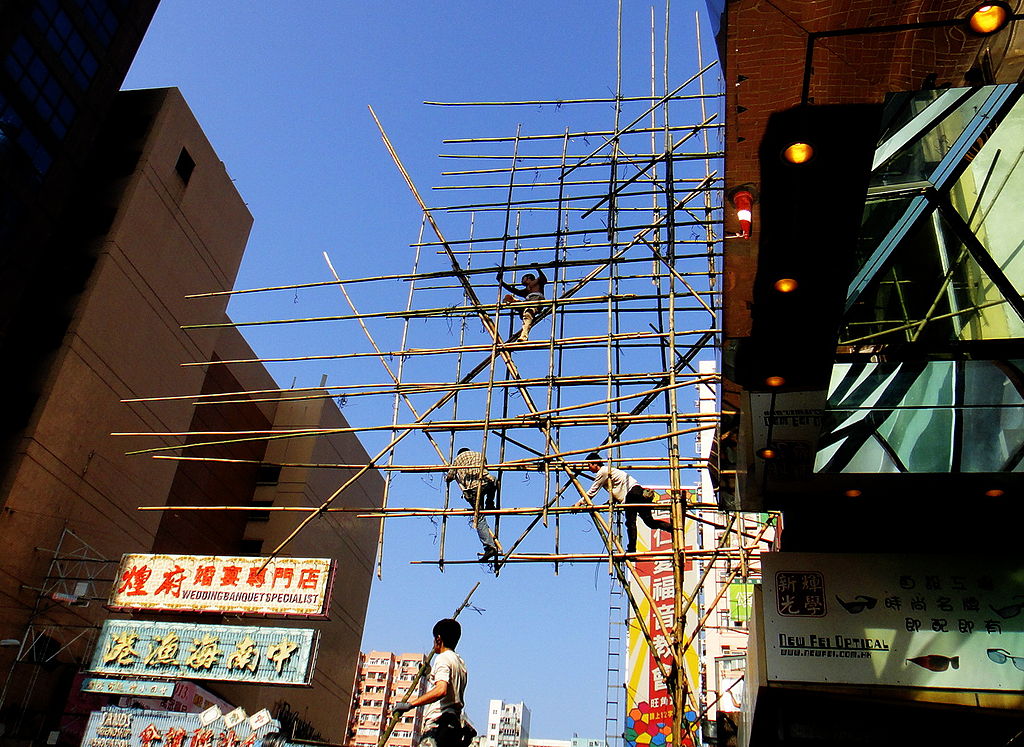
bamboo cantilever scaffolding
Image Source: Wikipedia

Needle or cantilever scaffolding is a type of scaffold that is angled out from the building or structure, usually near balconies. This type of scaffolding is fit for structures where creating a platform from the ground is not possible or difficult. It is called needle scaffolding since a needle usually made from timber supports the scaffold on all sides.        

What is suspended scaffolding?

English: Window Cleaners on Wedge Internationa...
English: Window Cleaners on Wedge International Tower in Houston Category:Images of Houston, Texas (Photo credit: Wikipedia)

Suspended scaffolding are platforms suspended by fiber or metal ropes from a structure overhead. The cord allows the scaffold to be raised and lowered to different levels of the work area. Suspended scaffoldings are commonly used in the construction of tall buildings, window washing, exterior building painting, and building maintenance.

What is trestle scaffolding?

trestle scaffolding
Image Source: tutorialstipscivil.com

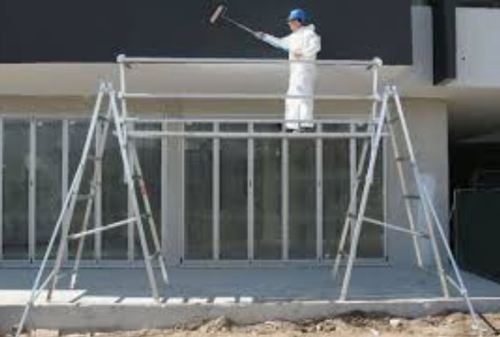
This type of scaffolding is made of a horizontal plank, metal board, or wood deck supported by a metal trestle or a support frame with a tripod or inverted V form.  It is recommended for use on projects up to 3 meters high.  

For further reading, check this out: Scaffolding Parts and Scaffolding Types

References: 

  • https://en.wikipedia.org/wiki/Scaffolding
  • https://www.britannica.com/technology/scaffold-construction

Back to Table of contents


What are the different scaffold parts

Different types of scaffolding typically include the following parts:

  1. Base jack – This is also called a plate used as the load-bearing base for the scaffolding structure.
  2. Standards – The standards are the vertical scaffolding parts used with connector joints.  They are supported or embedded on the ground or on drums.
  3. Ledgers – These are the horizontal braces of the scaffolding made of tubes positioned between two standards.    
  4. Putlogs – These scaffolding components connect the ledger to the wall of the wall building being worked on.
  5. Transom – A transom is a type of putlog supported by both ledgers.
  6. Bridles – These scaffolding parts support one end of the putlogs and bridge a wall opening.
  7. Braces– Braces are diagonal or cross section parts of scaffolding that are fixed to the standards.
  8. Batten or boarding – This part of scaffolding is the horizontal working platform that supports the workers and their materials. 
  9. Guard rail – This protective rail is included in the scaffolding to prevent workers from falling off the platform.  The guard rail usually consists of a top rail and a mid-rail.   
  10. Toe boards – Toe boards consist of parallel board sets that run around the working platform.  These boards are put over putlogs to protects workers at the platform level.
  11. Ladder scaffolding – The ladder allows workers to easily go up and down the scaffolding.
  12. Scaffolding wheels – These are wheels at the bottom of the scaffold that allow workers to easily move the scaffolding structure from one spot to another. 
  13. Coupler – A coupler is a fitting that links and joins tubes and other scaffolding parts together.
  14. Scaffold tie – This device is used between scaffold parts and the building or other structures.  It is used to prevent lateral movements of the scaffold. 
  15. Brackets – These are used to lengthen the width of the boarding or working platforms.

For further reading, check this out: Scaffolding Parts and Scaffolding Types

Reference: https://en.wikipedia.org/wiki/Scaffolding

Back to Table of contents


What are the different scaffolding materials

Scaffolding parts can be made of different materials, including wood and metal. 

What are timber scaffolds?

timber scaffold
Image Source: Pixabay

In timber scaffolding, the frame made from timber is created and set up at the project site.  The structure may consist of vertical, horizontal, and diagonal parts that support each other to make a study scaffolding.   

What are bamboo scaffolding materials?

bamboo cantilever scaffolding
Image Source: Wikipedia

Another popular wooden material used in scaffolding is bamboo.  Bamboo is still very commonly used in many countries.  Bamboo is lightweight but is strong and durable.  It is also considered safer by some workers in case of slips and falls.

What are metal scaffold materials?

metal scaffolding
Image Source: Pixabay

Nowadays, many scaffolding materials are made of metal tubes and couplers. These metals include steel, known for its sturdiness, and aluminum, known for being lightweight. 

Back to Table of contents


Should you buy or rent scaffolding

Scaffolding is a crucial structure in construction, renovation, cleaning, maintenance, and repair projects. If you wonder which is a more practical choice – to buy or rent scaffoldings, we are laying out different factors to help you decide.     

Before we go into the factor, let us quickly learn some information about scaffoldings.

What is scaffolding?

Scaffolding or scaffold is a temporary platform that helps support workmen and their materials during a project to make their work safer and more efficient. The scaffolding structure is usually made of tubes from steel or wood, couplers, and boards professionally built together to create a stable and secure frame. Workers use a scaffold to access certain heights and areas usually challenging to access and go to.  

When do you need scaffolding?

You are going to need scaffolding when you are doing projects that involve height and some materials. These include constructing, renovating, and repairing houses, commercial buildings, and other man-made structures like bridges, fences, and more. Apart from the construction activities, you will also need scaffolding in repairs, maintenance, renovation, cleaning, and installation projects involving heights. When a ladder is not enough for higher, bigger, and more complex projects, a scaffold will make your job easier and safer.  

Who uses scaffolding?

Builders and those in the construction business are the ones who often use scaffolding for their projects. But even if you are a regular homeowner, you may also need to use a frame for your home projects. In addition, painters and those in the business of installing items like solar panels, security systems, and more may also use scaffolding to make their job safer and more convenient.

Should you buy or rent scaffolding?

Scaffolding rental or purchase – which one is right for you? To make the correct choice, you have to consider some factors, including frequency of use, space, expertise, and cost.  

1. How often will you use a scaffold?

Scaffolding is not a cheap and easy investment. When you decide to buy scaffolding, you need to ensure you make the most of what you are spending. The first thing you need to deliberate is how often you will be using scaffolding.  

If you are in the construction, repair, or installation business, it might be a great idea to invest in a scaffold. This way, the structure is always ready when you need it. It might also be cheaper in the long run, considering the frequency of your use. When you’re not using it, you may also consider doing a scaffolding rental business for those who need it. This is especially advantageous if there are not so many scaffolding rentals available in your area.      

If you need scaffolding for single-use, the clear choice is to rent scaffolding. However, it is also the better choice if you occasionally use the structure. This way, the materials to make a scaffold will not go to waste after use. Besides, it is a lot more expensive to buy than to rent scaffoldings where you only pay when you need them.  

2. Do you have enough space to store scaffolding materials?

Space is another factor to consider when deciding to purchase or opt for scaffolding rental. Scaffolding materials take up space. So if you choose to buy scaffolding, you need to make sure you have enough space to keep the tubes, the boards, and connectors. If you don’t have the storage space, you would better rent a scaffold when you need it.

3. Do you have the expertise in setting up a scaffold?

A scaffold is an essential structure that needs to be set up correctly to avoid safety hazards. If you want to get one, you need to know how to properly install it. If you have been in the construction business, you may have the expertise to set it up. However, if you are not familiar with scaffoldings, you may not have the skills to do it. So if you only plan on using it once or occasionally, renting scaffolding might be a better choice. This way, you don’t have to worry about properly installing the scaffold and posing a hazard to yourself or your workers.  

Conclusion

Scaffolding is essential for construction, repair, maintenance, and installation projects, but it is not cheap. If you think you will be using it often and have the space to store it and the installation know-how, buying one can be a great decision. However, if you only use it occasionally and don’t have enough space to keep the materials or don’t have the skills to set it up correctly, you’d be better off renting scaffolding.  
You just need to find a reliable scaffolding rental in your area so that you can be assured of safety and value.  

Back to Table of contents


Amazing scaffolding that can save you time and money

Save time and money on masonry cost by using the right type of scaffolding for the job.

Normally, frames make you stop working about 3 times on a 14-foot wall. That is probably around 10 blocks per mason lost whenever they stop. And that is 30 blocks for 3 stops. Let us say you have 4 masons working, that is 1about 20 blocks per day lost.  Are you willing to throw away that much time and money simply because of scaffolding adjustments?  How about if there is a way to speed up work or  lessen the stops?  I’m sure as a project owner or manager, that you would be pleased to use it.

Non-Stop WORKHORSE scaffolding is jacked up in 1-3/4 inch increments with a jack handle that is moved from tower to tower. The long stroke on the handle gives you plenty of leverage to jack the platform when loaded with materials. To lower the scaffolding, simply raise the holding dog and “click” it down 1-3/4 inches at a time. The holding dog is a foolproof escapement mechanism. In addition, there is an inertial safety catch on the carriage.

Check out the video and the image to see non-stop WORKHORSE in action:

non stop scaffolding
OLYMPUS DIGITAL CAMERA

Source: nonstopscaffolding.com

Back to Table of contents


Set up scaffoldings in less than 5 minutes

Having a system makes work more efficient; and this holds true for all types of construction work.

We know for a fact that we spend more time setting up our scaffoldings during the initial phase of a task or project. More time setting up scaffoldings, means less time on doing the actual work of the project/job.

Check out this video on how they set up their scaffoldings in less than 5 minutes.
https://www.youtube.com/embed/2VpSw-bzdzE

(UPDATE: This video is no longer available)

Back to Table of contents

Filed Under: Blog

Scaffolding Rental Price Philippines – How Much Does It Cost?

August 9, 2022 By brodneil 3 Comments

Scaffolding is used for construction projects that require temporary support structures. 

The Basic Types of Scaffoldings

There are three main types of scaffolding: 

  • Prefabricated: Prefabricated scaffolding is manufactured at a factory and shipped to the job site. 
  • Semi-prefabricated: Semi-prefabricated scaffolding consists of two parts: a base and a superstructure. The base is usually constructed first and then attached to the structure.  
  • Custom-made: Custom scaffolding is designed specifically for each project.

The Benefits of Using Scaffolding Services

You will probably use scaffolding services if you need to build something big, such as a house. They help people reach higher places than they would typically be able to climb. This type of service is also known as “scaffold erection” or “building scaffolding.”

The Costs of Scaffolding Services

The rental price varies from region to region, from city to city, and obviously from one provider to another.

Here in Metro Cebu, you can find our scaffolding rental here: https://www.aom3builders.com/scaffolding-rentals/

Filed Under: Blog

  • 1
  • 2
  • 3
  • …
  • 6
  • Next Page »

Like and Share

Copyright © 2026 · AOM3 Builders
General Contractor · Cebu Philippines